
“The following story is true, even if it never actually happened.” – I read a novel years ago with an opening quote something like that. I remember thinking afterward, “It was true, even though it was fiction.” Sometimes I think of the Bible in that way – true, even if all of it may not have happened exactly the way described. (Example: Which version of the Creation story do you like most?) You might say, I don’t take Biblical inerrancy “literally” (paradox and irony intended).
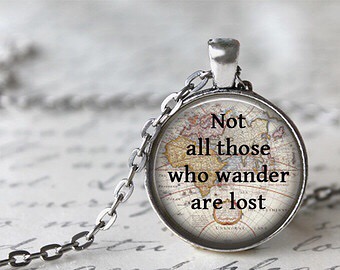
I have seen, heard, read, listened to and thought about so many “myth” like stories lately (e.g. Wonder Woman, Dr. Strange, Harry Potter), it started me thinking about these fictional stories which communicate such deep truths. I wander around in these stories for entertainment and am pointed to great truths. I see my life the same way, wandering around, bumping into and discovering truths more often than “pursuing truth” and finding it in a direct-line manner. Remembering the line, “Not all who wander are lost,” I Googled to find the line’s origin and “wandered” in book two of JRR Tolkien’s The Lord of the Rings. The line is part of a prophetic poem:
All that is gold does not glitter,
Not all those who wander are lost;
The old that is strong does not wither,
Deep roots are not reached by the frost.
From the ashes, a fire shall be woken,
A light from the shadows shall spring;
Renewed shall be blade that was broken,
The crownless again shall be king.[1]
What in the world does that mean? In the story, Tolkien was foreshadowing the “return of the King” – Aragorn, one of the “Christ-figures” in Tolkien’s Lord of the Rings series. Doesn’t it also resonate with truths from our lives and seem a bit like a Psalm or an Old Testament foreshadow?
Tolkien is one of many writers who use “myths” and myth-like stories to point to the Gospel. Perhaps you are more familiar with CS Lewis and The Lion, the Witch and the Wardrobe. JRR Tolkien was a friend of CS Lewis and the man Lewis credit’s as bringing him to Christ. In a famous conversation recorded in Lewis’ notes and letters, Tolkien and Lewis both loved “mythic” stories and talked about the truths embedded in them. Tolkien opened Lewis’s mind to the real reason behind the power of myths. Myths point to the truth of the “one true myth” – the Gospel, the story of Jesus, God’s unconditional love for the creation, and unconditional love for you and me. There’s a great film “re-creation” of the conversation between Tolkien and Lewis at: https://blogs.thegospelcoalition.org/evangelical-history/2016/09/20/85-years-ago-today-j-r-r-tolkien-convinces-c-s-lewis-that-christ-is-the-true-myth/ . Like many of us, the story Tolkien tells Lewis ends in JOY!
Read Isaiah 9: 1-7, and remember: God loves YOU unconditionally!
Mike
Today’s Reading: https://www.biblegateway.com/passage/?search=Isaiah+9%3A+1-7&version=NRSV
1. Tolkien, J. R. R. (1954), The Fellowship of the Ring, The Lord of the Rings, Boston: Houghton Mifflin (published 1987), “Strider”, ISBN 0-395-08254-4
 Joy Lutheran Church Ocala, Florida